


Introduction: Why Dowry Still Matters in Modern Society
Marriage is one of the oldest social institutions in human history. It connects families, traditions, cultures, and sometimes even economies. Among the many customs associated with marriage, one practice continues to spark debate across the world—what is dowry and why does it still exist in modern society?
Even in today’s world of education, equality, and legal reforms, dowry remains a deeply rooted tradition in many regions. Some people see it as a cultural practice, while others view it as a social problem that creates inequality and financial pressure. To understand it properly, we must look beyond opinions and explore its meaning, origin, evolution, and consequences in detail.
This article offers a complete breakdown of the concept, using simple language and real-life context so that anyone can understand its complexity.
What is Dowry? A Simple Explanation

To understand the topic clearly, we first need to define it properly. So, what is dowry in the simplest terms?
Dowry refers to the transfer of money, gifts, property, or valuable assets from the bride’s family to the groom’s family at the time of marriage. This can include cash, jewelry, vehicles, land, household goods, or other forms of wealth.
Originally, it was meant to support the bride financially in her new home. However, over time, it has often turned into a demand rather than a voluntary gift, creating social and legal concerns.
In many societies, discussing what is dowry also means discussing gender roles, economic pressure, and cultural expectations tied to marriage.
Historical Background of Dowry Practices
Ancient Civilizations and Early Forms
The idea behind dowry is not new. Ancient civilizations such as Rome, Greece, and parts of Asia practiced similar systems. At that time, families gave dowry as a form of inheritance for daughters since women often did not have property rights.
Instead of being a burden, it acted as financial protection. It ensured that a woman entering marriage had some economic security in her new household.
Medieval Society and Social Status
During medieval times, dowry became closely linked with social class. Wealthy families used it to strengthen alliances and maintain status.
At this stage, discussions around what is dowry began to shift from support to social expectation. Larger dowries often meant better marriage proposals, especially among elite families.
Colonial and Modern Transformation
With changing laws and economic systems during colonial periods, the structure of marriage also changed. Dowry slowly evolved into a more transactional expectation in many regions.
Today, its meaning is often debated, especially in countries where legal systems have banned or restricted it.
Cultural Meaning and Social Importance
Symbol of Tradition and Identity
In many cultures, marriage rituals are incomplete without some form of dowry exchange. It is considered part of family honor and tradition.
However, when people ask what is dowry, they often discover that its meaning changes from one culture to another.
Social Pressure and Expectations
Families sometimes feel pressure to give dowry due to societal expectations. This pressure can be emotional, financial, and even psychological.
In such cases, dowry is no longer a gift—it becomes an obligation.
Dowry as a Status Indicator
In some communities, the size of dowry reflects the social standing of the bride’s family. This creates competition among families and increases financial burden.
Different Forms of Dowry in Practice
Dowry is not limited to one type. It can appear in multiple forms depending on tradition and economic conditions.
Cash Payments
Money is the most direct and common form. Families often give cash either during engagement or marriage ceremonies.
Property and Assets
Land, houses, or commercial properties may be transferred as part of dowry arrangements.
Gifts and Household Items
Furniture, kitchen appliances, vehicles, and jewelry are commonly included in dowry packages.
Legal Perspective on Dowry
Anti-Dowry Laws
In several countries, including India, dowry is illegal. The law clearly defines and prohibits both giving and receiving dowry.
These laws were introduced to address the growing misuse of the system.
Enforcement Issues
Even though laws exist, enforcement is not always effective. Social pressure and fear often prevent families from reporting cases.
This makes the question of what is dowry not only cultural but also legal in nature.
Legal Punishments
Violations can result in fines, imprisonment, or both. The aim is to discourage exploitation and protect women’s rights.
Social Impact of Dowry
Financial Burden on Families
Many families take loans or sell assets to meet dowry demands. This creates long-term financial stress.
When people ask what is dowry, they often do not realize how deeply it can affect household economics.
Gender Inequality
Dowry reinforces the idea that women are a financial responsibility. This leads to discrimination and unequal treatment.
Domestic Violence and Abuse
In extreme cases, failure to meet dowry expectations leads to harassment or violence. This is one of the most serious consequences associated with the practice.
Comparison Table: Dowry vs Bride Price
| Feature | Dowry | Bride Price |
|---|---|---|
| Direction | Bride’s family → Groom’s family | Groom’s family → Bride’s family |
| Purpose | Support or expectation | Compensation or appreciation |
| Regions | South Asia, some global cultures | Africa, Pacific regions |
| Social Impact | Often negative in modern context | Varies by culture |
| Legal Status | Often banned or restricted | Usually permitted |
Modern View of Dowry
Changing Social Attitudes
Today, many people question traditional practices and ask again what is dowry in modern society. The answer is increasingly linked with inequality rather than tradition.
Urban Awareness
Urban populations are more likely to reject dowry due to education and financial independence.
Role of Education
Education plays a major role in changing perceptions. Educated individuals are more aware of equality and legal rights.
Psychological Effects of Dowry
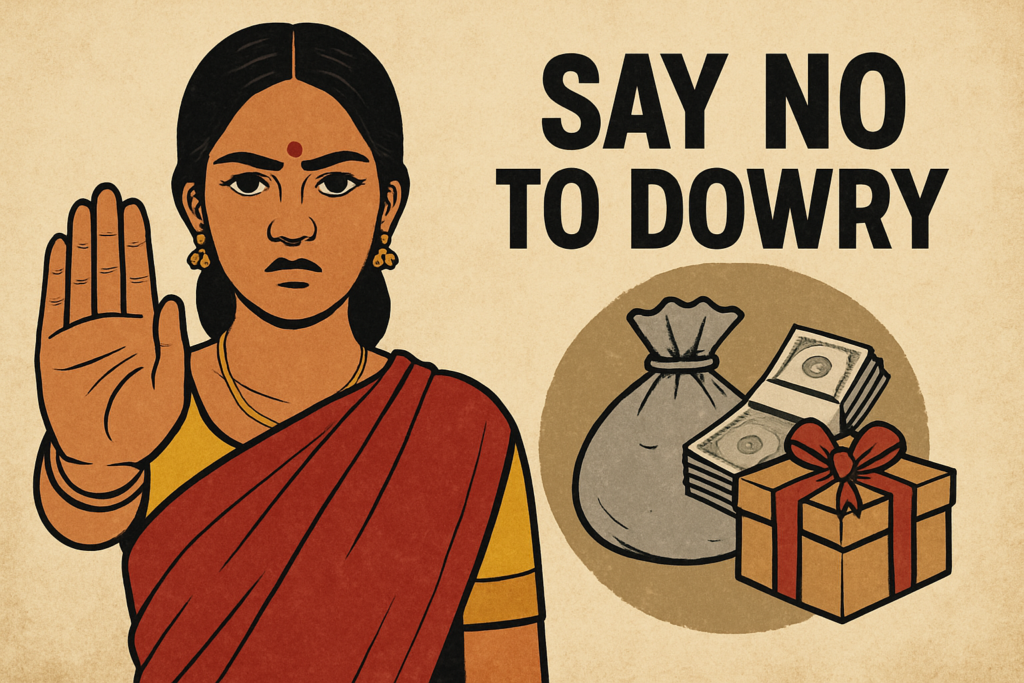
Stress on Families
Families often experience anxiety while arranging dowry. Social comparison increases pressure further.
Impact on Women
Women may feel unwanted or treated as a financial burden. This affects confidence and emotional well-being.
Marital Pressure
Even after marriage, dowry-related expectations can create tension between families.
Economic Consequences
Debt Cycles
Families sometimes take loans to meet expectations, leading to long-term debt.
Wealth Inequality
Dowry contributes to unequal distribution of wealth within society.
Why Dowry Still Exists Today
Despite awareness and laws, dowry continues due to:
- Social traditions
- Family expectations
- Economic inequality
- Cultural pressure
- Lack of enforcement
Understanding what is dowry today means understanding both tradition and modern challenges.
How Society Can Reduce Dowry Practices
Awareness and Education
Education helps people understand equality in marriage.
Strict Law Enforcement
Laws must be applied consistently to discourage violations.
Women Empowerment
Financial independence reduces dependency on marriage-based transactions.
Key Points Summary
- Dowry is the transfer of wealth during marriage
- It has historical roots in inheritance systems
- Modern practice often leads to inequality
- It is legally banned in many countries
- Education and awareness are key solutions
FAQs About Dowry
1. What is dowry in simple language?
It is money or gifts given by the bride’s family to the groom’s family during marriage.
2. Why does dowry still exist?
Due to traditions, social pressure, and lack of awareness.
3. Is dowry legal everywhere?
No, many countries have banned or restricted it.
4. Does dowry affect society?
Yes, it leads to financial stress, inequality, and sometimes violence.
5. Can dowry be completely stopped?
Yes, through education, law enforcement, and cultural change.
Conclusion: Moving Toward Equality in Marriage
Understanding what is dowry is not just about learning a definition—it is about understanding a deep-rooted social system that affects millions of families. While it may have started as a form of support, its modern impact often leads to inequality, pressure, and financial hardship.
The solution is not only legal action but also cultural transformation. When society values equality, education, and respect more than tradition-based expectations, harmful practices naturally decline.
A future without dowry is possible, but it requires awareness, courage, and collective responsibility. Marriage should be a bond of love and partnership—not a financial transaction.
Read More:-Legal Rights, Freedom & Equality Journey for Indian Women Today